
Resources
Carpet and Tile Care for Central Texas Dust, Heat and Cedar Season
Floors in Central Texas work hard. Fine limestone dust blows in from construction sites and caliche lots, summer storms send mud across entryways, and every winter the hills west of Interstate 35 release clouds of cedar pollen. All of it ends up in your carpet fibers and grout lines, and much of it ends up back in the air your employees breathe.
For facility managers in Cedar Park, Leander, Liberty Hill and the rest of the Hill Country edge, a floor care plan that follows the local seasons can extend the life of your flooring and keep your building looking its best year‑round.
What Central Texas does to commercial floors
Dust that never quits
Much of Central Texas sits on limestone, and fast growth means construction is almost always happening somewhere nearby. Fine, gritty dust gets tracked in on shoes and settles into carpet. Under foot traffic, that grit acts like sandpaper, cutting carpet fibers and dulling floor finish. Carpet that looks gray in the main walkway is often worn by grit, not just dirty.
Heat, storms and humidity
Long, hot summers keep air conditioning running for months, and sudden storms track water and mud into lobbies. Moisture that sits in carpet or seeps into porous grout can lead to odors and stains. Low‑moisture cleaning methods, good entry mats and prompt spill response matter more here than in drier climates.
Cedar season
The Ashe juniper, known locally as mountain cedar, pollinates in winter, generally from mid‑December through February, with peak counts often in January. Pollen counts tend to be highest west of I‑35, and cold fronts can trigger big releases. The fine pollen comes into buildings on clothing, shoes and through doors, and settles into carpet and onto hard surfaces, where it can be stirred back into the air.
A seasonal floor care calendar
Here is a simple way to plan floor care around the Central Texas year.
Late fall: get ahead of winter
- Deep clean carpet before the holidays and cedar season begin.
- Strip and refinish vinyl tile in lobbies and corridors so it is protected for winter traffic.
- Check entry mats and replace worn ones.
Winter: cedar season
- Increase vacuuming frequency in entrances and high‑traffic areas.
- Use vacuums with good filtration to help capture fine particles instead of blowing them back into the room.
- Damp‑wipe hard surfaces near entries, where pollen settles first.
Spring: reset after the pollen
- Schedule a deep carpet clean after cedar and spring pollen seasons wind down.
- Clean tile and grout in restrooms and lobbies to remove the winter's buildup.
Summer: protect against storms and heavy use
- Respond to wet entryways quickly to keep mud and water from spreading.
- Burnish or recoat VCT finish in busy areas as needed.
- Schedule floor work in schools and other facilities during summer breaks when buildings are empty.
Commercial carpet: protect the fibers
Daily or nightly vacuuming is the most important thing you can do for carpet, because it removes grit before it cuts fibers. Periodic deep cleaning removes the soil vacuuming cannot reach. For most offices, deep cleaning a few times a year, with more frequent attention to entrances and main walkways, keeps carpet looking good and lasting longer.
The cleaning method matters too. Our commercial carpet cleaning uses low‑moisture methods designed for commercial carpet, so offices can be cleaned after hours and are ready for use the next morning.
Tile and grout: the porous problem
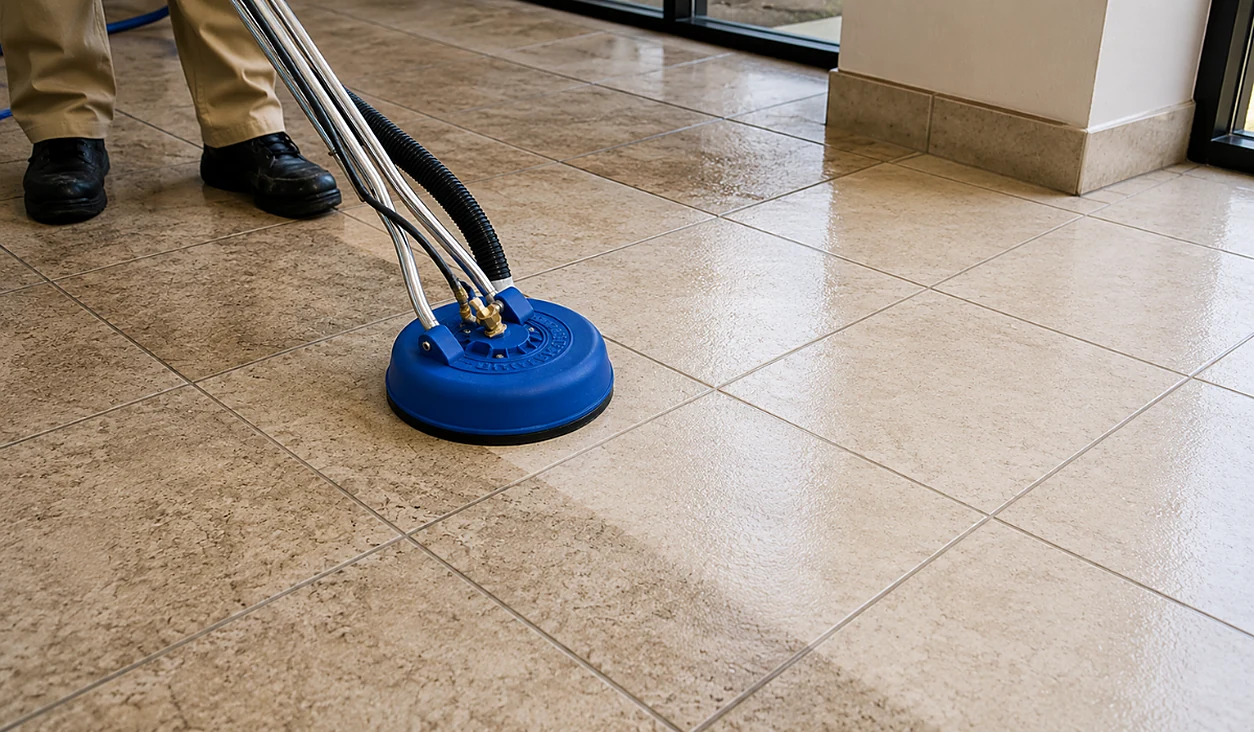
Ceramic and porcelain tile is tough, but grout is porous. It absorbs soil, spills and mop water, and over time grout lines turn dark even when the tile looks clean. Regular mopping often pushes dirty water into the grout rather than removing it. Tile and grout cleaning with professional equipment lifts that embedded soil, and grout color sealing restores a uniform color and helps protect the grout from future stains.
VCT: the finish is the floor's armor
Vinyl composition tile is common in schools, clinics, retail stores and break areas. Its shine comes from layers of floor finish, and that finish is what takes the abuse from grit and foot traffic. When the finish wears thin, soil grinds into the tile itself. Periodic VCT strip & wax removes old, dirty finish and applies fresh coats, so the floor is protected again.
Small habits that make a big difference
- Use entry mats: outdoor scraper mats plus indoor absorbent mats catch much of the soil before it reaches your floors.
- Clean spills right away: the longer a spill sits, the more likely it is to become a permanent stain.
- Move furniture glides: protect carpet and VCT from chair and furniture damage.
- Track high‑traffic paths: clean them more often than low‑traffic areas.
Signs your floors need more than routine care
Nightly cleaning keeps floors presentable, but some signs mean it is time for periodic service:
- Carpet in walkways looks gray or flattened compared with the edges of the room.
- Spots keep coming back after they are cleaned, which often means soil is deep in the backing.
- Grout lines are noticeably darker than when the tile was installed.
- VCT looks dull even right after mopping, or black marks have worked into the tile.
- Entry areas stay dusty even with regular vacuuming during cedar season.
Catching these early is easier on your flooring and usually means less intensive work than waiting until the problem is obvious to every visitor.
Build floor care into one plan
The easiest way to stay ahead of Central Texas dust and pollen is to make floor care part of your regular cleaning program instead of an emergency project. When your routine facility cleaning and periodic cleaning are scheduled together, nothing falls through the cracks. Contact us to plan a floor care schedule for your facility.
Frequently asked questions
How often should commercial carpet be deep cleaned?
Most offices benefit from deep cleaning a few times a year, with entrances and main walkways cleaned more often. Nightly vacuuming between deep cleanings removes the grit that wears carpet fibers.
When is cedar season in Central Texas?
Mountain cedar, or Ashe juniper, typically pollinates from mid-December through February, with peak counts often in January. Pollen tends to be heaviest west of I-35 and can spike after cold fronts.
Why does grout get dark even after mopping?
Grout is porous, so it absorbs soil and dirty mop water. Professional tile and grout cleaning lifts embedded soil, and grout color sealing helps protect the grout and restore an even color.