
Resources
How Often Should a Medical Office Be Disinfected?
Patients notice a clean clinic before they ever see a provider. They notice the smudged check‑in counter, the overflowing trash can by the exam room door and the restroom that ran out of paper towels at 2 p.m. But the cleaning that matters most for infection prevention is often the part they never see: how often each room is disinfected, which surfaces get the most attention and whether the products are used the way the label says.
If you manage a medical, dental or specialty practice in Round Rock, Georgetown or Cedar Park, this guide walks through a practical, room‑by‑room cleaning frequency for outpatient facilities. It is based on the Centers for Disease Control and Prevention (CDC) environmental cleaning guidance for healthcare settings, translated into a schedule your staff and your cleaning provider can actually follow.
Cleaning vs. disinfecting: why both matter
Cleaning removes dirt, dust and organic material from a surface. Disinfecting uses a chemical to kill germs that remain on the surface. The order matters. A disinfectant applied to a dirty surface does not work as well, because soil and residue shield microorganisms from the product. That is why professional medical office cleaning always pairs the two: clean first, then disinfect.
The CDC also stresses using an EPA‑registered disinfectant and following the manufacturer's instructions, including the contact time. Contact time (sometimes called dwell time) is how long the surface needs to stay visibly wet for the product to work. A quick spray‑and‑wipe that dries in ten seconds may not meet the label, which means the surface was wiped but not truly disinfected.
Recommended cleaning frequency by area
Not every room in a clinic carries the same risk. The CDC's outpatient guidance groups areas by how they are used and how often they are touched. Here is how that translates to a typical practice.
Waiting rooms and reception
Waiting areas should be cleaned at least daily. High‑touch surfaces such as chair arms, check‑in counters, clipboards, pens, door handles and light switches deserve extra attention. During cold and flu season, many practices add a midday wipe‑down of the front desk and the most‑used chairs.
Exam and consultation rooms
For exam and consultation rooms, the CDC recommends cleaning and disinfecting high‑touch surfaces at least twice daily, with a full cleaning of the room, including the floor, at the end of the day. High‑touch surfaces in an exam room include the exam table, countertops, sink handles, the provider's stool, equipment controls, keyboards and the door handle. In most practices, clinical staff handle between‑patient wipe‑downs and the cleaning provider handles the end‑of‑day clean.
Procedure and treatment rooms
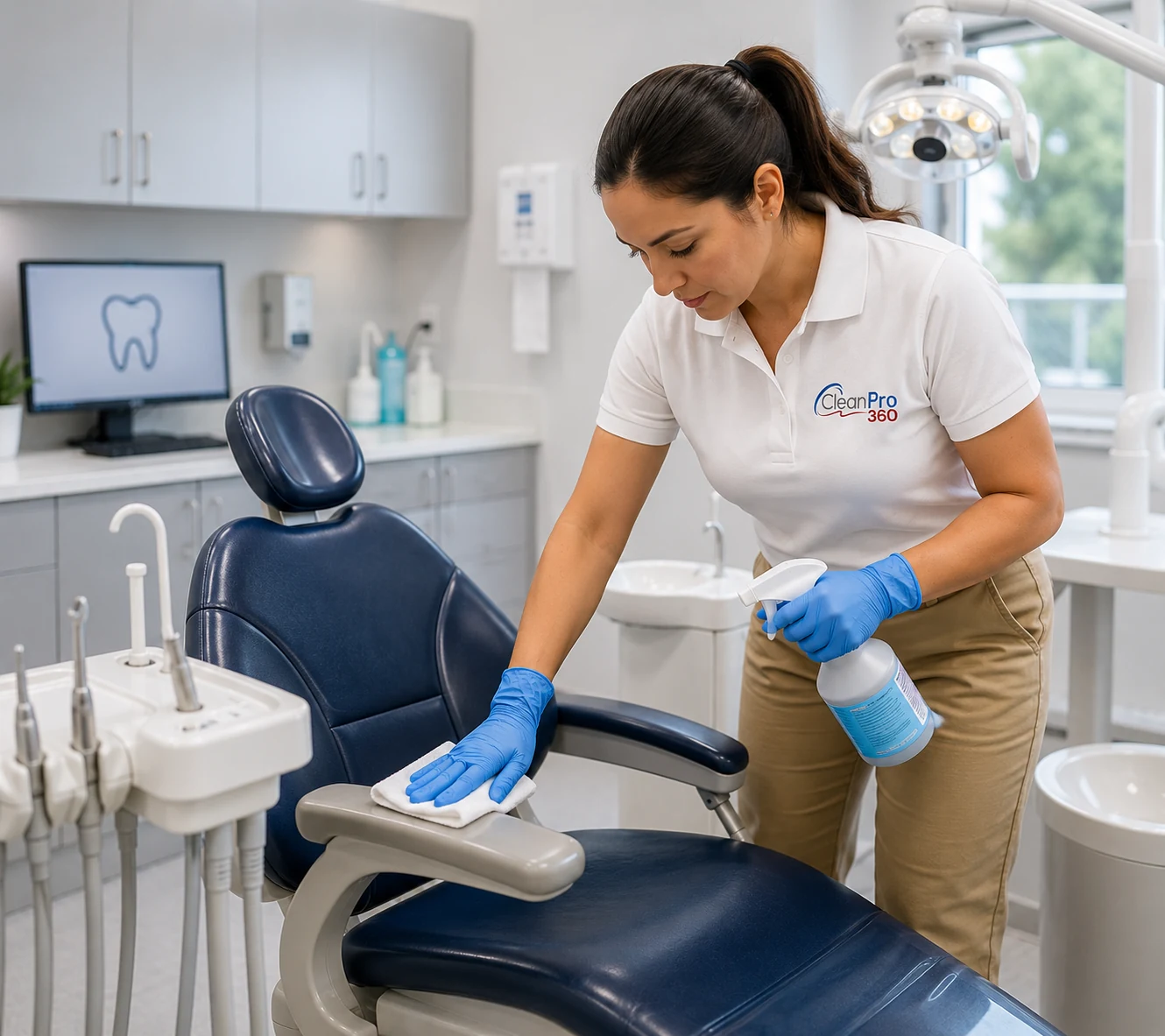
Rooms used for minor procedures need cleaning before and after each procedure, plus a thorough terminal clean at the end of the day. Dental operatories follow a similar pattern, with chairs, light handles, trays and countertops treated between patients and the full room cleaned after the last appointment.
Restrooms
Patient and staff restrooms should be cleaned and disinfected at least daily, and more often in busy clinics. Toilets, sinks, faucet handles, grab bars, door handles and dispensers are all high‑touch. Restocking paper towels, toilet tissue and soap is part of the job; an empty soap dispenser undermines every hand‑hygiene sign on the wall.
Low‑touch surfaces
Walls, window sills, vents, high ledges and the tops of cabinets are low‑touch surfaces. They do not need daily disinfection, but they do need to be on a schedule, such as weekly or monthly, so dust does not build up. These are the areas that tend to get skipped when a cleaning plan is not written down.
A sample weekly cleaning plan for a small clinic
Every practice is different, but a small family practice or dental office often looks something like this:
- Every night: clean and disinfect exam rooms, procedure rooms, restrooms and high‑touch surfaces in reception; empty trash; vacuum carpet and damp‑mop hard floors with a disinfectant.
- During the day (staff): wipe down exam tables and equipment between patients; spot‑clean spills right away.
- Weekly: dust low‑touch surfaces, vents and ledges; clean interior glass and entry doors; detail break rooms.
- Periodically: deep clean carpet, scrub tile and grout and refinish hard floors.
The key is a written scope that says who does what and how often. When everyone assumes someone else is handling the exam room keyboards, nobody is.
Floors are part of infection prevention
Hard floors in clinical areas collect splashes, tracked‑in soil and dust that resettles on surfaces. Daily damp mopping with an appropriate product keeps that under control, but floors also need periodic care. Sealed and waxed vinyl tile is easier to clean thoroughly than worn, porous tile, and stained grout lines in restrooms hold soil that daily mopping cannot reach. Periodic VCT strip & wax and tile & grout cleaning keep floors cleanable, not just shiny.
Reducing cross‑contamination
How a room is cleaned matters as much as how often. A few habits make a real difference:
- Work from clean areas to dirty areas, and from high surfaces to low ones.
- Use color‑coded microfiber cloths so restroom cloths never touch an exam room counter.
- Change mop heads and cloths often instead of carrying the same one through the whole building.
- Keep chemicals labeled, stored correctly and used at the right dilution.
Practices with regulated waste or blood exposure also have to follow OSHA's Bloodborne Pathogens Standard, which requires a written cleaning schedule for contaminated surfaces. Your cleaning provider should understand where their responsibilities stop, for example, sharps containers and regulated medical waste are handled by your staff and your licensed waste vendor.
Choosing a cleaning partner for your practice
A medical office needs more than a general janitorial crew that "also does clinics." Look for a provider that builds a written, room‑by‑room scope with you, trains its staff on cross‑contamination and contact times, cleans after hours so patient flow is never interrupted, and inspects its own work. Our medical facility cleaning programs are built that way, and our no‑touch sanitizing service can add an extra layer of disinfection for busy waiting rooms and treatment areas.
If your practice is ready for a cleaning plan built around your rooms and your patient schedule, contact us to set up an on-site visit.
Frequently asked questions
How often should exam rooms be disinfected?
CDC outpatient guidance recommends cleaning and disinfecting high-touch surfaces in exam and consultation rooms at least twice daily, with a full clean of the room, including the floor, at the end of the day. Many practices also wipe down exam tables and equipment between patients.
Do medical offices need a special type of disinfectant?
Healthcare facilities should use an EPA-registered disinfectant suitable for the setting and follow the label directions, including dilution and contact time. Your cleaning provider should be able to tell you which products they use and why.
Who handles medical waste and sharps containers?
Sharps containers and regulated medical waste should be handled by your trained staff and a licensed medical waste vendor. A commercial cleaning provider handles general trash, surface cleaning, disinfection and floors.