
Resources
How Often Should Commercial Carpet Be Cleaned?
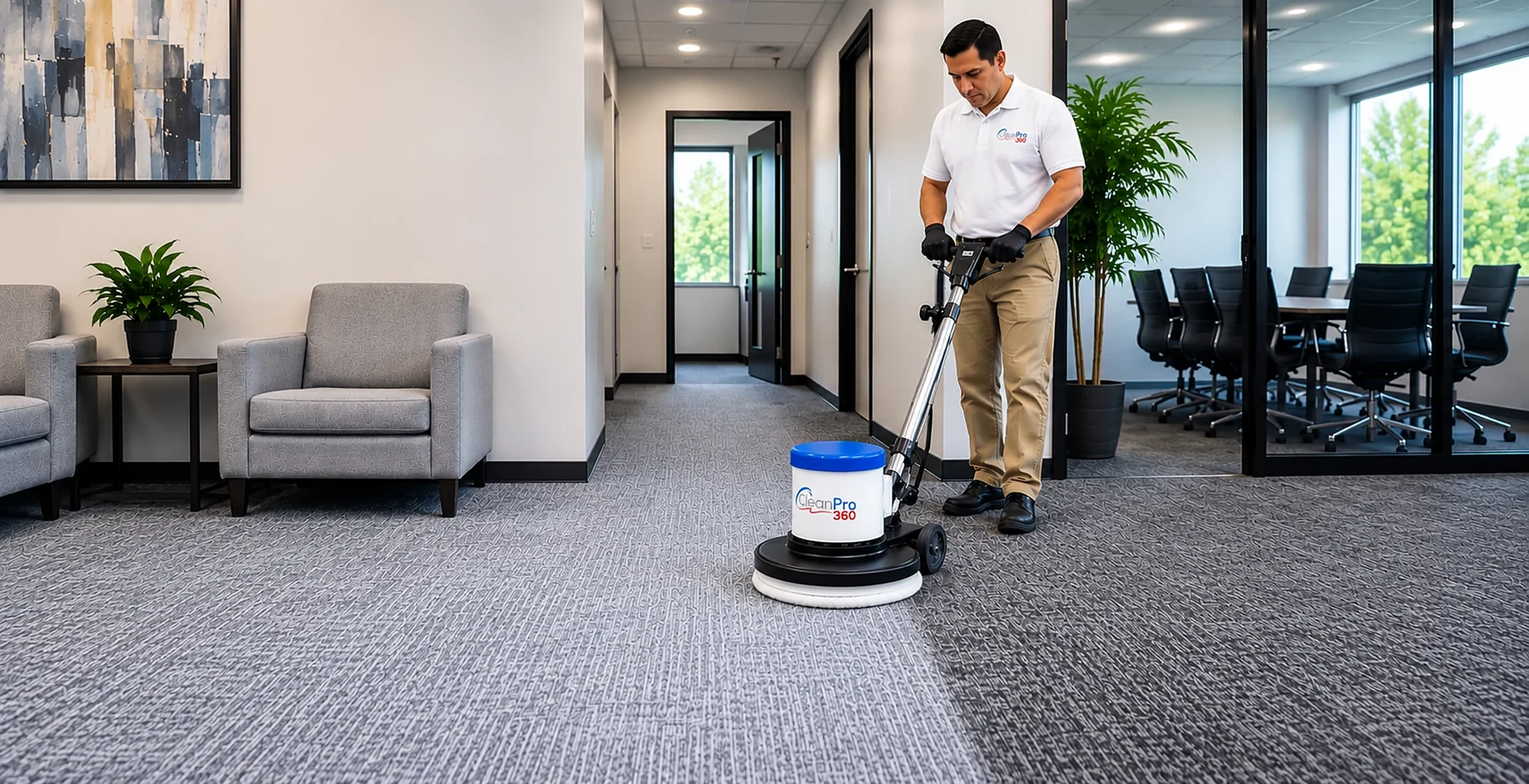
Commercial carpet hides soil until it cannot. A lobby can look acceptable on Monday and show gray lanes by Thursday, because the grit is down in the fiber, not sitting on top where a quick vacuum would have caught it. Facility managers in Cedar Park, Leander, and Liberty Hill ask us how often to deep‑clean. The honest answer is that nightly vacuuming and periodic cleaning do different jobs, and the periodic job depends on traffic.
The ranges in this guide are general guidelines. They are a place to start before we see your fiber, your entries, and how the space is used. Two offices with the same square footage can be a year apart on the calendar.
Vacuuming and deep cleaning are not the same task
Vacuuming removes loose soil from the top of the pile. Done often, it also pulls out the fine grit that would otherwise cut fibers every time someone walks the lane. In this part of Texas that grit is not abstract. Caliche and limestone dust come in from parking lots and job sites, and it is sharp. Carpet that looks flat in the walkway and fluffy at the edges is often worn by that grit, not simply dirty.
Deep cleaning is what reaches the soil vacuuming no longer lifts. It is periodic. It is not a substitute for vacuuming, and vacuuming is not a substitute for it. Most of the buildings we maintain do well when both are on the same plan: routine facility cleaning covers the vacuuming, and carpet cleaning is scheduled by area, with entries and main paths done more often than private offices.
A traffic‑based schedule
Use these as general guidelines. Adjust them for spills, pets in a veterinary lobby, or a renovation that filled the fiber with drywall dust.
- Low traffic. Private offices, low‑use conference rooms, and upper‑floor suites with a small staff. Deep cleaning about twice a year is a common starting point, with vacuuming a few times a week. Some of these rooms can go longer if entries are matted and there are few spills.
- Moderate traffic. Open offices, apartment clubhouses, and professional waiting rooms. Plan on deep cleaning a few times a year for the whole area, and a shorter cycle for the path from the door to the reception desk. Vacuum the paths nightly if you can.
- High traffic. Lobbies, retail floors, school corridors, clinic waiting rooms, and worship spaces that fill and empty in a rush. Entries and main lanes may need deep cleaning quarterly or even more often, while side rooms stay on a lighter calendar. Vacuuming those lanes needs to be frequent, or the deep clean is just removing damage that already happened.
- After an event or a project. A full building of job‑site dust, or a weekend event with food, is its own visit. Do not wait for the next scheduled clean if the fiber is loaded. Drywall dust in particular should come out before it is walked in deeper.
Our notes on carpet and tile care through Central Texas dust, heat, and cedar season walk through the same year from the floor's point of view. This page is the frequency question those seasons create.
The encapsulation method we use
There are several ways to clean commercial carpet. The one we use in occupied buildings is low‑moisture encapsulation, which is also what we mean by fast‑dry carpet cleaning.
- We vacuum first, so loose soil is gone before any solution goes down.
- An encapsulation solution is applied to surround the remaining soil and break it loose from the fiber.
- A machine works the area with microfiber bonnet pads, lifting soil out of the pile instead of flooding it.
- Once the solution has crystallized around the soil, a final vacuum removes that encapsulated material.
We use this method because a commercial building usually cannot give a floor up for a long dry time. The carpet is not soaked the way a heavy hot‑water extraction soaks it, so offices cleaned after hours are in a condition to walk on the next morning. It is aimed at appearance and at the soil that daily vacuuming leaves behind. It is not a magic pass for a carpet that is already matted beyond recovery, and we will say so if a section needs to be replaced rather than cleaned.
Spots are a separate step. A coffee spill that has sat for a month may improve and may not disappear. Tell us about known spots before the visit so we can test them instead of discovering them in the last room.
What Central Texas does to carpet
The schedule above moves earlier in the year for a few local reasons.
- Caliche and construction dust. Growth along the corridor means many buildings in Round Rock, Hutto, Georgetown, Pflugerville, and Taylor have a job site nearby for months. The dust is fine and abrasive. Entries on the windward side of a building load up first.
- Cedar and spring pollen. From about mid‑December through February, Ashe juniper pollen settles into carpet, especially west of I‑35. It is light, so it stays suspended and then lands everywhere, not just in the walkway. A pre‑season and a post‑season clean is a pattern that fits Cedar Park, Leander, Liberty Hill, and the west side of Austin.
- Rainy‑season mud. Storms turn that same dust into mud at the door. If the mat is short or saturated, the mud is in the first ten feet of carpet. Those ten feet may need attention even when the rest of the suite does not.
- Heat and closed buildings. Long cooling seasons mean doors open onto hot pavement all day, and a Friday‑to‑Monday closed office can hold odor in a damp spill. Low‑moisture cleaning avoids adding more water to a building that is already fighting humidity.
Signs the interval is too long
- Traffic lanes are darker or flatter than the carpet under desks.
- A freshly vacuumed entry still looks gray.
- Spots reappear after they dry, which usually means the soil is deeper than a surface wipe.
- The room smells better right after vacuuming and worse by afternoon.
- People drag chair mats around because the fiber has crushed under the casters.
The first two are the usual signal to shorten the cycle or to add the entries to an in‑between visit. Crushed fiber and a worn backing are a replacement conversation, not a cleaning one.
Small things that stretch the calendar
- Outside scraper mats plus inside absorbent mats, long enough that people take two steps on them.
- Vacuuming the mat itself, not only the carpet around it.
- Blotting spills the day they happen, with a clean cloth, instead of scrubbing them into the backing.
- Chair pads in the rooms where casters spin all day.
- Asking the nightly crew to slow down on the lanes and the entries, even if that means a private office is vacuumed less often.
Putting it on one plan
The buildings that stay ahead do not book carpet cleaning as an emergency. They pick a traffic‑based interval, vacuum in between, and revisit the interval when the lanes say it is off. We clean carpet in offices, schools, clinics, retail, and apartment common areas across Austin, Round Rock, Georgetown, Cedar Park, Leander, Pflugerville, Hutto, Taylor, and Liberty Hill. City pages such as commercial carpet cleaning in Round Rock and Austin describe the same service in those markets.
If you want a schedule built around the lanes you actually have, request a free on‑site quote or call us at (512) 200‑7093. We will look at the fiber with you and tell you which areas can wait and which should not.
Frequently asked questions
How often should commercial carpet be cleaned?
It depends on traffic. A common starting point is about twice a year for low-traffic rooms, a few times a year for open offices, and a shorter cycle for lobbies and main paths. Frequent vacuuming is what protects the fiber between those visits.
What is encapsulation carpet cleaning?
It is a low-moisture method. The carpet is vacuumed, an encapsulation solution is worked into the fiber with a machine and bonnet pads, and a later vacuum removes the crystallized soil. It is the method we use so commercial carpet can be cleaned without a long dry time.
Does vacuuming replace periodic carpet cleaning?
No. Vacuuming removes loose soil and grit from the top of the pile. Periodic cleaning reaches soil that vacuuming no longer lifts. A carpet plan needs both, with vacuuming more often in the lanes and at the entries.