Resources
Keeping Apartment Common Areas Clean: A Property Manager's Guide
Prospects decide how a community feels before they ever see a floor plan. They see the leasing office, the hall that leads to the clubhouse, the fitness room, and whatever the mail area looks like on a Tuesday. Property managers in Leander, Liberty Hill, and Georgetown ask us to keep those spaces consistent, not just presentable on tour mornings.
This is a guide to commercial common‑area cleaning for apartment communities: the shared spaces your staff and residents use. Vacant‑unit work is a separate scope, covered in our make‑ready unit turn guide.
Why common areas slip
A clubhouse can look fine at 9 a.m. and tired by late afternoon. Tours, packages, kids after school, and a fitness room that never really closes all land on the same finishes. A once‑a‑week wipe does not keep up with that, and a deep clean with no routine behind it does not either. The communities that stay ahead put the shared spaces on a recurring apartment community cleaning plan, then add floor care and restroom work when the surfaces need it.
Frequencies below are general guidelines. A 300‑unit community on a busy road and a small community in Taylor will not be on the same calendar. We set the visits after we walk the property.
Leasing office
Treat the leasing office like the workplace it is. Prospects sit in it, and your team lives in it.
- Dust and wipe desks, conference tables, and the reception counter. Clear glass on the entry doors, which show every handprint by midday.
- Vacuum or dust‑mop floors, and spot‑clean carpet in the waiting chairs.
- Empty trash and recycling before a late tour, not only at the end of the week.
- Clean the office restroom and restock it from the supplies you keep on site. We refill from your stock. We do not bring a separate paper‑goods program unless that is what you have asked for.
Many offices do well with several visits a week. A quieter office in a smaller community may be fine with fewer. Model‑unit presentations and Saturday hours are the usual reason to add a visit.
Clubhouse and lounge
Clubhouses collect food, scuffs, and whatever event was held the night before. A practical scope covers tables, chairs, kitchenette counters and the sink, interior glass, light switches, and the floor. Upholstery is vacuumed. Spills are blotted, not ignored until the next periodic clean.
If the clubhouse has VCT or tile, nightly or several‑times‑a‑week mopping keeps it, and a periodic strip and wax or tile and grout cleaning is what restores it when mopping no longer does. Carpeted lounges need the same split: routine vacuuming, and encapsulation cleaning on a traffic‑based schedule.
Fitness center
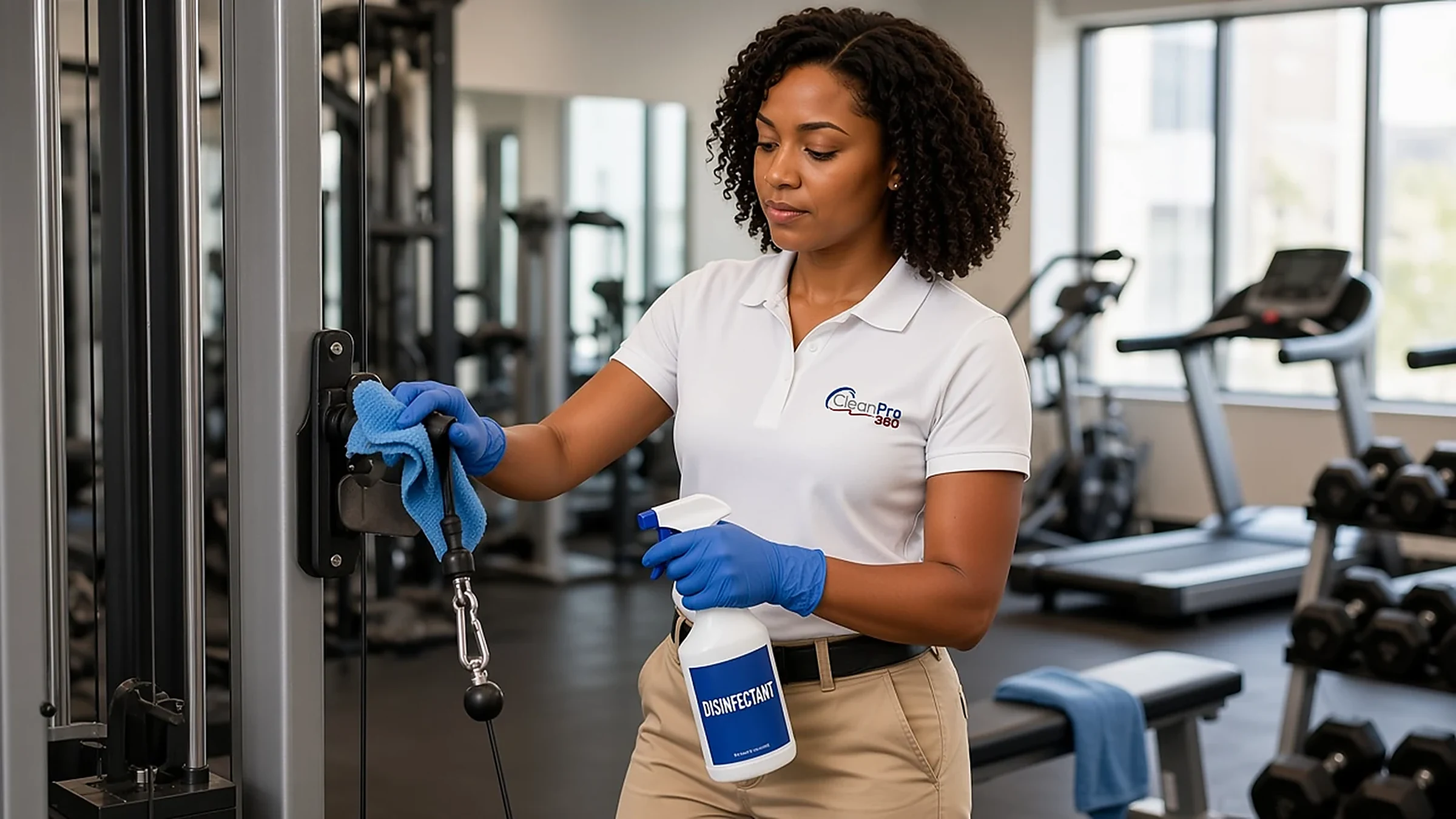
Sweat, dust, and chalk show up fast in a Central Texas summer, when residents work out early and the room never fully cools. A useful fitness scope includes equipment housings, benches, mirrors, the floor under the cardio line, and the door handles. We do not repair machines. We clean around them and tell you if a cleaner cannot reach a surface safely.
Locker rooms and showers, if you have them, are where a mop starts to fail. Grout holds soil, and a mop spreads it. That is the usual place we add no‑touch sanitizing, which sprays, rinses, and vacuum‑extracts hard surfaces so the soil leaves the room instead of being pushed along the floor. How often depends on how heavily the room is used. A small fitness room in a garden community is not on the same cycle as a large center that stays busy from 5 a.m.
Mail room and package area
Mail rooms are small and heavily touched. Bank after bank of boxes, a counter for packages, and a floor that takes muddy shoes in every storm. Wipe the horizontal surfaces and the door hardware, dust the tops of the banks, and keep the floor swept. During the holidays and rainy months, this room needs more visits than it does in a dry week in July. Package lockers have added another set of touch points. Include the screens and the counter in front of them.
Hallways, entries, and stairs
Interior corridors show footprints before they show anything else. Dust mopping or vacuuming, spot mopping, and a wipe of handrails and elevator buttons cover the routine. The first thirty feet inside each entry takes caliche dust from parking lots and, after a storm, actual mud. Mats only work if they are flat, large enough, and cleaned. We look at mats whenever we are on the property, because a curled mat dumps soil onto the floor finish.
Exterior breezeways are a different surface. They take pollen, oak tassels in spring, and blown dust. Sweeping them on a set day keeps the debris out of the units at the ends of the hall.
Pool area
We clean the parts of a pool area that are hard surfaces and furnishings. That means the deck furniture, the rails, the restrooms and changing rooms, the trash, and the floors of the pool house. We do not balance water, brush the pool, or handle chemicals. Those stay with your pool vendor. What residents notice, besides the water, is a dirty restroom and a table that was not wiped after the weekend. In summer those restrooms often need the same no‑touch visit as the fitness showers. In cooler months the deck is quieter, and pollen on the furniture becomes the complaint instead.
A simple way to set the week
- Several times a week. Leasing office, clubhouse restrooms, fitness room, and the main entries. Daily is worth it when tours are constant.
- Weekly. Mail room detail, hallway edges, breezeways, and pool furniture outside peak season.
- Periodic. Carpet cleaning, VCT care, tile and grout, and no‑touch sanitizing in showers and pool restrooms. The gap between these visits depends on traffic and on how well the routine work is done.
Write the scope room by room. "Clean the amenities" means something different to every vendor who bids it. A written list is what lets your team inspect without a debate.
Local wear, from cedar to caliche
Communities on the west side, in Cedar Park, Leander, and Liberty Hill, deal with cedar pollen that coats clubhouse sills from about mid‑December through February, and with caliche dust from new sections still under construction. Round Rock, Hutto, Pflugerville, and Taylor see the construction dust too, plus muddy entries whenever a storm crosses I‑35. Austin properties often have heavier package traffic and longer fitness hours. The cleaning plan should follow the property, which is why we would rather walk it than send a generic amenity list.
We clean common areas for communities across those cities. If you want the leasing office, clubhouse, fitness center, mail room, halls, and pool area on one schedule, request a free on‑site quote or call us at (512) 200‑7093.
Frequently asked questions
Which apartment common areas should be on a cleaning schedule?
Leasing offices, clubhouses, fitness centers, mail and package rooms, hallways and entries, and the restrooms and furniture at the pool. Pool water care stays with your pool vendor.
How often should a fitness center and clubhouse be cleaned?
It depends on how heavily residents use them. Many communities have the leasing office, fitness room, and main entries cleaned several times a week, with periodic floor care and restroom work on a longer cycle. A quieter property may need fewer visits.
Can the same crew clean common areas and unit turns?
Yes. Many communities use one provider for recurring common-area cleaning and for vacant-unit turns, so the standard matches. The two scopes are written separately.