
Resources
Preparing Your Workplace for Cold and Flu Season in Central Texas
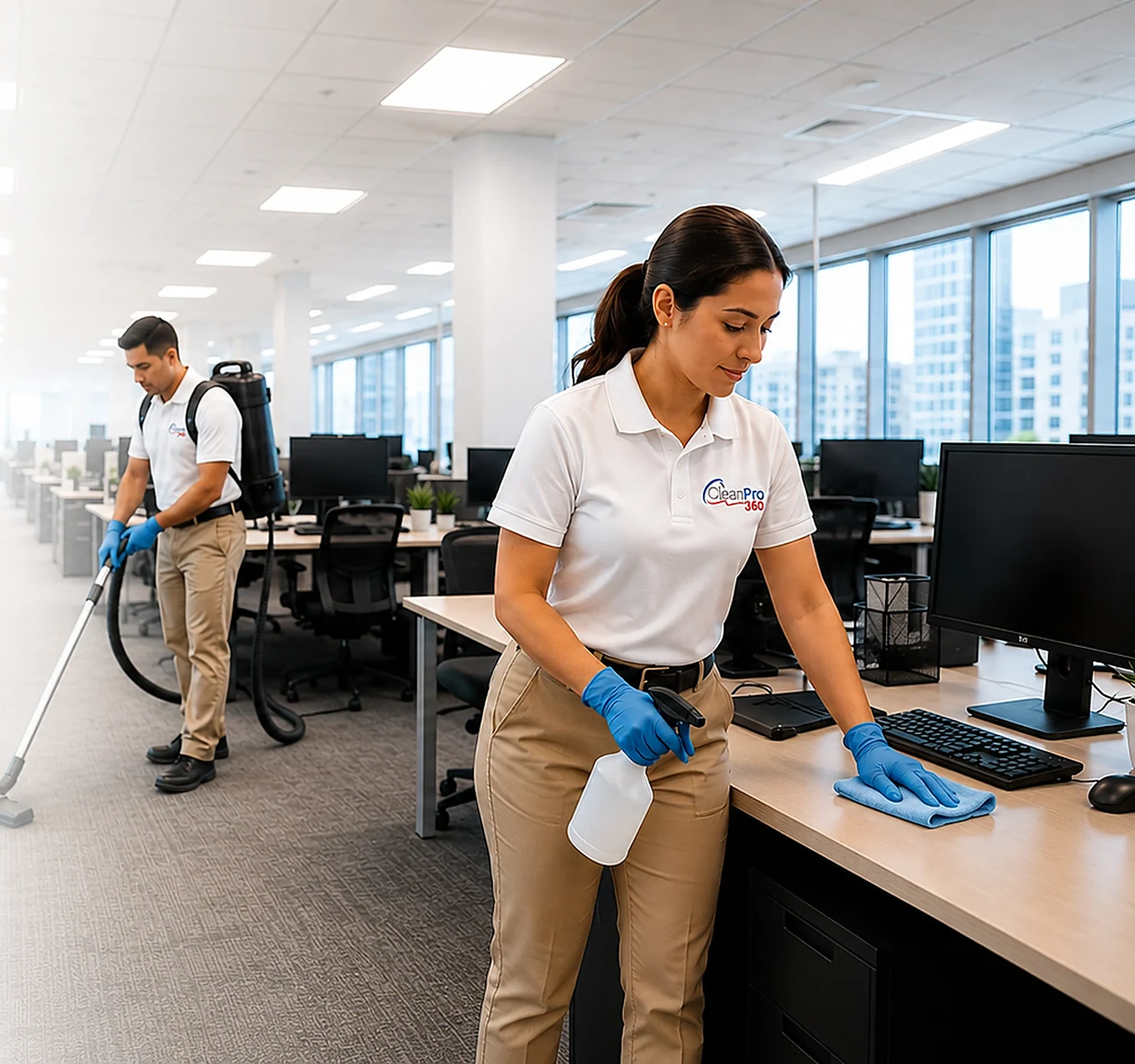
Cold and flu season in Central Texas does not look like a long northern winter. Offices stay busy, patios close for a few months, and people spend more of the day indoors while cedar pollen is also in the air. Facility managers in Austin, Round Rock, and Pflugerville use that stretch, roughly late fall through early spring, to tighten the cleaning they already have rather than invent a new program for eight weeks.
Cleaning a workplace does not stop a virus, and we will not claim that it does. Handwashing, staying home when sick, and the policies your own company sets matter more than any mop. What a cleaning plan can do is keep shared surfaces and restrooms from falling behind at the time of year when more people notice them. This is a practical checklist for office and facility managers.
What changes in the building
Three things stack up here at the same time.
- People are inside. Conference rooms, break rooms, and elevators get more continuous use. High‑touch surfaces are touched more often between cleans.
- Cedar season. Ashe juniper pollen typically runs from about mid‑December through February, heavier west of I‑35 in Cedar Park, Leander, and Liberty Hill, and still present in Austin, Round Rock, and Georgetown. It rides in on coats and settles on desks, sills, and carpet. A floor that is only vacuumed in the traffic lane will hold it.
- Rain and mud. Winter storms are irregular, but when they arrive, entries from Hutto to Taylor to the Austin office corridors go muddy in a day. That soil is then walked into the break room and the restrooms.
A plan that only adds disinfectant wipes, and ignores the entry floor, misses half of what the season actually does to the building.
High‑touch surfaces
Ask your crew to treat these as a set, not as a few items they get to if there is time. In most offices the list is door handles and push plates, elevator buttons, stair rails, conference‑table edges, chair arms in the reception area, the break room sink and appliance handles, copier touchscreens, and light switches in shared rooms.
The product has to match the surface, and it has to be used the way the label says, including how long the surface stays wet. A spray that is wiped dry immediately is a wipe, not a disinfecting step. Your provider should be able to tell you what they use on a laminate conference table versus a stainless sink. If you manage a clinic, the exam‑room schedule is stricter than this. Use our guide to medical office disinfection for those rooms, and keep this list for the offices and staff areas around them.
Frequency is a guideline. A small office may cover the list once a day. A busy lobby or a break room that serves a full floor may need it more than once. We set that with you when we build the routine facility cleaning scope, and we would rather add a second pass on the break room than pretend every surface in the building needs the same attention.
Restrooms and the break room
These two rooms generate more complaints in flu season than the open office does. Stock matters as much as the clean. We restock paper towels, soap, and tissue from supplies you keep on site, so the closet has to be full before a long weekend. An empty towel dispenser is what people remember.
Restrooms that are already heavily used, especially in buildings with a fitness room or a large shared cafe, are candidates for no‑touch sanitizing on a shorter cycle through the winter. That service spray‑cleans and vacuum‑extracts hard surfaces. It is a deeper clean of the room, not a claim about illness.
In the break room, the sink, the table, the refrigerator handle, and the microwave door are the whole job. Crumbs in a conference room can wait. A dirty coffee station will not. If your crew cleans after hours, which is how many of our offices prefer it, those surfaces are clear of people and can be cleaned properly. Our note on after‑hours commercial cleaning covers why that timing helps.
Floors, mats, and the air people notice
Pollen and grit do not stay on the sole of a shoe. They end up in carpet and on hard floors, and they are kicked back up. For the season, we usually recommend three ordinary steps.
- Vacuum entries and the main paths more often than the private offices. Carpet that is only vacuumed weekly will hold cedar dust until spring.
- Keep a scraper mat outside and an absorbent mat inside, and have them cleaned when they are loaded. A mat that is full of mud is a source, not a barrier.
- Schedule periodic carpet cleaning before cedar season if you can, and again after it, rather than waiting until the lanes look gray in March. Hard floors may want a scrub and recoat if winter traffic has dulled the finish.
None of this filters the building's air. If you are asking about HVAC filters, that conversation belongs with your mechanical contractor. We can tell you when the returns are dusty. We do not service the units.
A short pre‑season list
- Walk the building with your cleaning lead and mark the high‑touch list in writing, so a substitute crew hits the same spots.
- Check that restroom and break room supplies will last a long weekend.
- Confirm which rooms get a second pass when headcount is high, and which can stay on the normal rotation.
- Look at entry mats and the first twenty feet of floor. Plan carpet or VCT work before the holidays if the finish or the fiber is already tired.
- Decide how you will tell the crew about a closed room or a team that is out, so they spend the time in the areas still in use.
We do not ask you to report who is ill. A note that a wing is empty, or that the break room needs extra attention this week, is enough.
Across the metro
The same season shows up differently by city. West of I‑35, cedar is the story. Along the corridor from Georgetown through Round Rock and Austin, it is a mix of pollen, commuter traffic, and muddy parking garages. In Hutto, Taylor, and Pflugerville, newer buildings often have big glass entries that show every handprint and a lot of construction dust still coming in from surrounding pads. The checklist is the same. The emphasis changes after we see the building.
If you want the winter scope written into your regular cleaning instead of handled as a scramble in January, request a free on‑site quote or call us at (512) 200‑7093.
Frequently asked questions
Can workplace cleaning stop colds and flu?
No. Cleaning keeps shared surfaces, restrooms, and entries from falling behind during the season. It does not replace handwashing or your company’s own policy on staying home when sick.
What should be cleaned more often during cold and flu season?
High-touch points such as door handles, elevator buttons, rails, break room sinks and appliance handles, and conference tables, plus restrooms and entry floors. How often depends on how many people use each area.
Should commercial carpet be cleaned before cedar season?
Many Central Texas offices schedule carpet cleaning before cedar pollen builds up, and again after the season, because pollen and grit settle into the fiber. Entries and main paths usually need it before private offices do.